The smartest publishing decision starts with knowing what you want your book to achieve
The publishing landscape has changed dramatically. Authors today have more options than ever before. We have traditional publishing, self-publishing, hybrid publishing, print-on-demand, ebooks, audiobooks and an ever-growing number of businesses promising to turn our ideas into books quickly, easily and, apparently, profitably.
Choice is generally a good thing. But in this case, it has also created an enormous amount of confusion.
It has become harder for aspiring authors to understand what they are actually buying, what they should reasonably expect and which option will give their book the best chance of achieving what they want it to achieve.
There is also a lot of hype. People selling publishing packages naturally tend to promote their particular model as the best option. People selling courses about making money from ebooks tell us ebooks are the future. Traditional publishers reinforce the credibility of traditional publishing. Hybrid publishers promote the advantages of having a publisher’s logo on the spine, while self-publishing businesses talk about creative control and keeping more of the revenue.
Everyone has a vested interest. This is why the first decision shouldn’t be, “How do I get my book published?”. The first decision should be, “What do I want this book to achieve?”. That is an entirely different question.
My advice is to make a considered decision on your publishing path
I’ve been writing and publishing books for over 30 years. During that time, I’ve worked with traditional publishers, independently published my own books and worked with hybrid publishing models. I’ve produced print books, ebooks and audiobooks, and I use print-on-demand where it makes commercial sense.
I don’t believe there is one publishing model that is automatically right for every author or every book. The path I choose depends on the book, the audience, the commercial opportunity, the level of control I want, the investment I’m prepared to make and, most importantly, what I want the book to do for me.
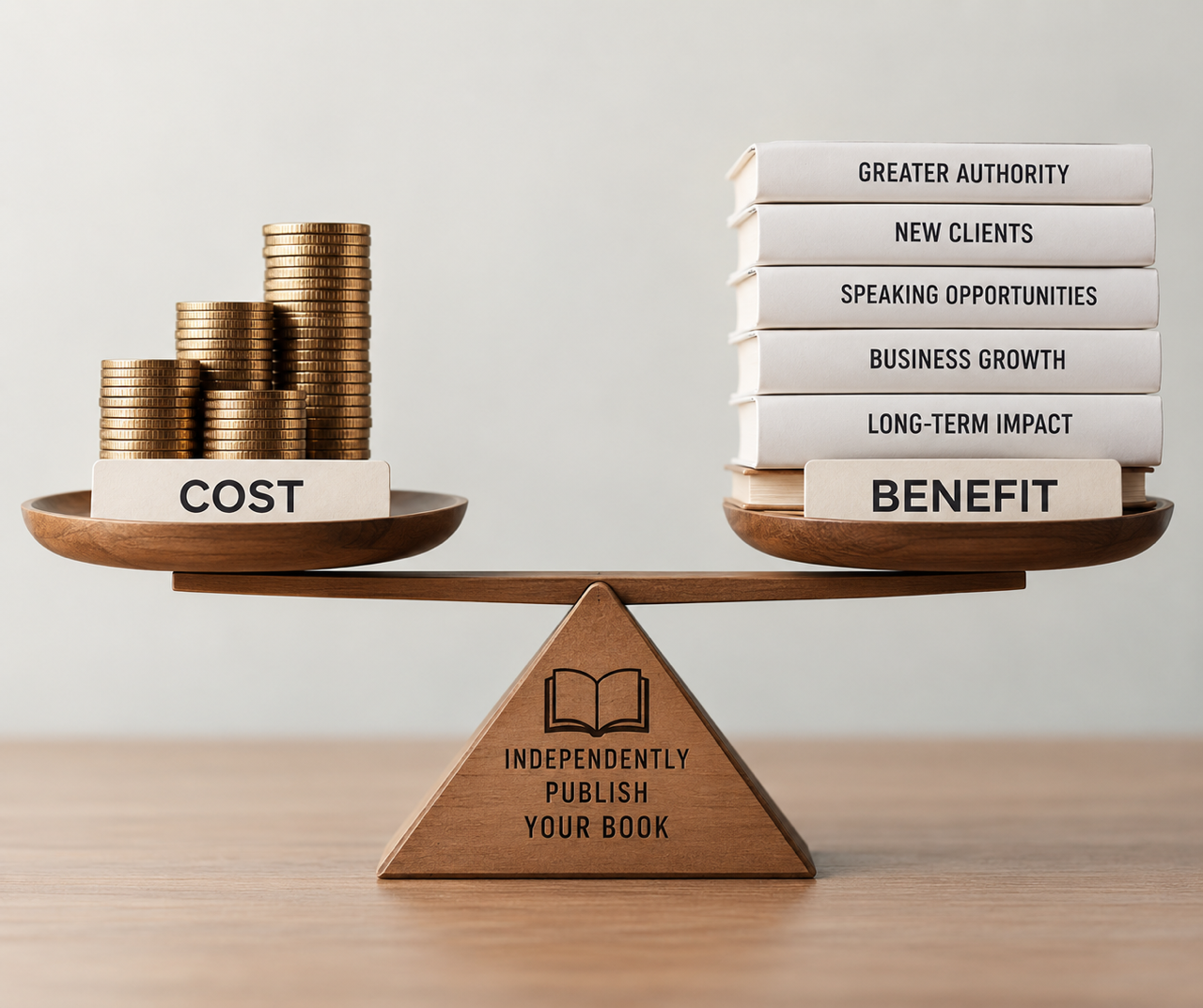
If your ambition is to see your book in bookshops, that may lead you down one path. If you want to use your book to build authority, attract clients and create speaking opportunities, that may lead you down another. If you have a very specialised book for a tightly defined professional audience, you may not need a conventional publisher or widespread retail distribution at all.
The publishing model should serve the purpose of the book. The purpose of the book should never be compromised simply to fit a particular publishing model.
We don’t need a one-size-fits-all approach. We need a considered decision based on the commercial outcome we are trying to create.
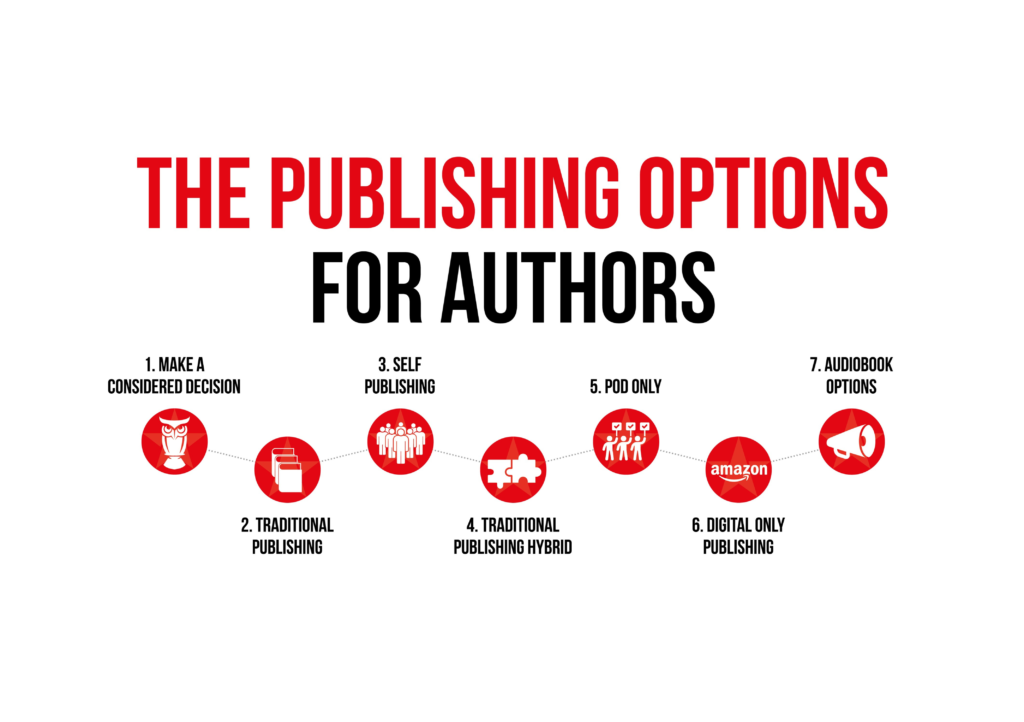
1. Traditional publishing
Traditional publishers are very good at what they do.
A quality publisher brings editorial expertise, professional production, established distribution, industry relationships and a level of credibility that can be difficult to replicate independently. A good publisher knows how to turn a manuscript into a professionally produced book and get it into the book trade.
But traditional publishing is difficult to access. Publishers receive an enormous number of submissions and can only take on a small percentage of them. They are making commercial decisions about what they believe they can sell, through the channels they understand, to a market they believe exists.
A great idea is not always enough. You generally need a strong concept, a well-developed manuscript or proposal, a clearly defined audience, commercial relevance and, increasingly, an existing profile or platform.
There are also many misconceptions about what happens once a traditional publisher says yes.
Some authors imagine that the publisher will take over, promote the book extensively, arrange media appearances, secure speaking engagements and keep generating sales for years. Occasionally, a book receives considerable support. Most books, however, receive their strongest promotional push around the launch before the publisher’s attention naturally shifts towards its next group of titles.
Regardless of how your book is published, its long-term success will largely be up to you. You will still need to build an audience, talk about the book, create opportunities, approach organisations, appear in the media, speak at events and continually find relevant ways to put the book in front of the right people.
Traditional publishing may give you credibility, distribution and professional support. This works in the short term but what happens are the initial buzz of the launch?
2. Self-publishing
Self-publishing has been one of the great democratising forces in the publishing world.
An author no longer needs to wait for permission from a publisher. You can retain control of your intellectual property, make your own creative and commercial decisions, determine your timelines and potentially earn more from each book sold.
But there is one uncomfortable truth about self-publishing: you generally get what you pay for. I’ve heard so many horror stories, directly from authors who have gone down a self publishing path, based on slick marketing materials, with big claims and promises and cheap prices. The end results have been a nightmare on every level – terrible quality books, filled with mistakes, timelines that blow out not by months but by years and so much more.
A professionally self-published book still requires professional editing, proofreading, cover design, internal design, typesetting, printing, distribution and project management. If you cut corners at every stage, the finished book will show it.
The arrival of generative AI has made it possible to produce a book faster and more cheaply than ever before. It has not necessarily made it possible to produce a good book faster and more cheaply.
We are seeing a flood of beige books: generic manuscripts assembled from predictable information, filled with familiar ideas, lightly edited and wrapped in a reasonable-looking cover. They may technically be books, but they lack substance, originality, depth and the lived experience that makes a book worth reading.
If you are going to self-publish, do your homework. Look carefully at the books a supplier has produced. Speak with their authors. Find out who owns the files and intellectual property. Understand exactly what is included, what costs extra and what happens after the book has been printed.
Self-publishing can produce an exceptional book, but only when it is treated as a professional publishing project. Do your homework on the companies you are considering, don’t get caught up on the hype.
3. Hybrid publishing
Hybrid publishing sits somewhere between traditional publishing and self-publishing.
The author makes a financial contribution, often a very substantial one (this could be between $20k and $40K) and the publisher provides a range of services that may include editing, design, production, distribution, sales support and access to the publisher’s imprint.
This pay-to-publish model is becoming increasingly common because it reduces the financial risk for the publisher. Rather than investing all the money and hoping to recover it through book sales, the publisher earns revenue from the author as part of the production process.
A reputable hybrid publisher can be a good option for the right author. You may gain access to a more experienced publishing team, broader services, better distribution and the credibility of an established publishing logo on the spine.
But hybrid publishing requires careful due diligence.
The term “hybrid publisher” is used very broadly. At one end of the spectrum are highly professional publishers producing excellent books. At the other are expensive vanity publishing operations charging authors significant amounts of money while offering little meaningful editorial input, distribution or ongoing support.
Don’t be seduced by the word “publisher.” Ask what you are receiving for your investment. Look at the quality of the books. Investigate their distribution capability. Understand the royalty structure, contractual terms, rights ownership and what the publisher will realistically do to help sell the book.
Hybrid publishing can offer real value, but be prepared to make a considerable investment—and make certain the value you receive justifies it.
4. Print-on-demand
Print-on-demand, commonly called POD, means a copy of your book is printed when someone orders it rather than you paying for a large print run and storing boxes of books.
It is important to understand that POD is not really a publishing model. It is a printing and fulfilment method. You still need to write, edit, design and format the book professionally. POD primarily saves you from paying upfront for a large quantity of printed books.
For some authors, particularly those selling internationally or uncertain about demand, this makes a great deal of sense. It reduces the initial financial risk, eliminates storage problems and means a book doesn’t technically need to go out of print.
But POD also has limitations. The per-unit cost is generally higher, your choices around paper and finishes may be restricted, and the quality can still be inconsistent compared with a professionally managed offset print run.
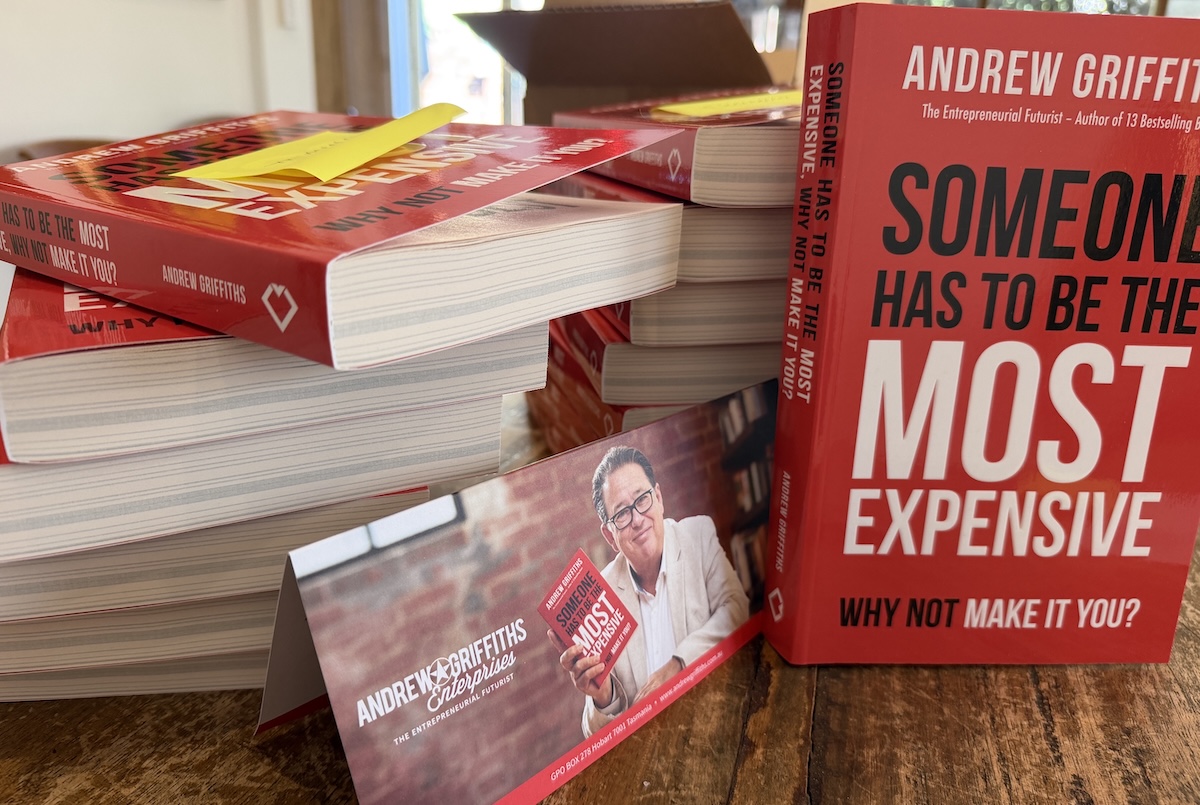
There is another downside that isn’t discussed enough. In my experience, authors who rely entirely on print-on-demand often don’t leverage their books as actively because they don’t have copies sitting beside them, ready to be used. They are less likely to send books to prospective clients, event organisers, media contacts, collaborators and influential people within their industry.
A physical supply of books creates the opportunity for action.
Print-on-demand can be an extremely useful part of a publishing strategy, particularly for international fulfilment and keeping a book permanently available. I simply wouldn’t want it to be my only source of printed books.
5. Digital-only publishing
More authors than ever are publishing digital-only books, generally as ebooks, Kindle titles or downloadable PDFs.
There are valid reasons for choosing this approach. Digital books are inexpensive to deliver, easy to update, immediately available around the world and useful for highly specialised or time-sensitive information. They can also work effectively as lead-generation tools, programme resources or introductory products.
Unfortunately, digital publishing has also become home to a vast amount of low-quality content. It is now incredibly easy to generate a manuscript using AI, give it a reasonable cover, place it behind an impressive landing page and call it a book. The marketing promises a transformational resource. What arrives is often a poorly written, poorly edited and poorly designed PDF filled with generic information that could have been found online for free.
Most of us have bought at least one of these and felt completely ripped off.
An ebook can be excellent, but the format doesn’t excuse a lack of quality. It still needs a strong idea, original thinking, good writing, professional editing and thoughtful design.
I would also be very cautious about the breathless claims of earning tens of thousands of dollars from a simple ebook. In many cases, the person making the claim earns more money from teaching other people how to sell ebooks than they do from the ebooks themselves.
Digital books serve a purpose. But for an author looking to build serious authority and credibility, a cheaply produced ebook rarely carries the same weight as a professionally produced physical book.
6. Audiobook-only publishing
Audiobooks are more important than ever and should be part of the publishing strategy for most serious authors.
A growing number of people prefer to listen rather than read. An audiobook allows an author to reach people while they are driving, exercising, travelling or doing the thousand other things that make it difficult to sit down with a printed book.
Some authors are now choosing to release an audiobook without producing a print edition. It is a brave and potentially cost-effective option. A professionally produced audiobook might cost in the vicinity of $4,000 to $5,000, depending on its length, the narrator and the complexity of the production.
But an audiobook-only strategy is also limiting.
You don’t have a physical book to place in someone’s hands. You lose what I call the “thud value” of a substantial, well-produced book landing on a desk. You cannot easily sell copies in bulk to organisations, include books at conferences, send them to the media or use them as tangible tools in your client acquisition process.
You also exclude the significant number of people who simply don’t listen to audiobooks.
I’m a great advocate for audiobooks, but I see them as an important addition to a publishing strategy rather than an automatic replacement for a printed book.
Publishing models and book formats are not the same thing
One of the reasons this conversation becomes confusing is that we often mix up publishing models with book formats.
Traditional, self-publishing and hybrid are publishing models. They describe how the book is funded, produced, owned and brought to market.
Print, print-on-demand, ebook and audiobook are formats and production methods. They describe how the reader experiences or receives the book.
These choices are not mutually exclusive.
A traditionally published book may be available in print, ebook and audiobook formats, with additional copies supplied through print-on-demand. A self-published author may produce a high-quality offset print run, an ebook, an audiobook and a POD version for overseas orders. A hybrid-published author may use exactly the same combination.
The smartest strategy is often not choosing one option. It is choosing the right combination.
Come back to what you want the book to achieve
For my own books, I will continue to consider traditional publishing, self-publishing and hybrid publishing depending on the particular project and what I want that book to achieve.
Regardless of the publishing model, I’m likely to use print-on-demand, produce an ebook and create an audiobook. Most importantly, I will continue to produce and keep physical copies of my books.
Why? Because I’m a commercial author. Selling a few books through a bookshop or online retailer is not where I expect to make most of my money. The larger commercial return comes from what my books help me sell: coaching, speaking engagements, workshops, programmes, consulting and other high-value opportunities.
A book builds trust. It demonstrates substance. It communicates your thinking when you are not in the room. It gives potential clients an opportunity to understand who you are, what you know and whether they want to work with you.
That is why the publishing decision matters so much. You are not simply deciding how to manufacture a book. You are deciding how to create and deliver a commercial asset that may represent you for many years.
The publishing landscape has changed, and it will continue to change. New technology will create more options. Artificial intelligence will make publishing faster, cheaper and more accessible. It will also fill the market with even more shallow, generic and instantly forgettable books.
Accessibility is no longer the challenge, book quality is.
So don’t begin by asking which publishing option is the easiest, fastest or cheapest. Begin with the question that should shape every decision that follows:
‘What do I want this book to achieve and which combination of publishing model and formats gives it the best possible chance of achieving it?”.