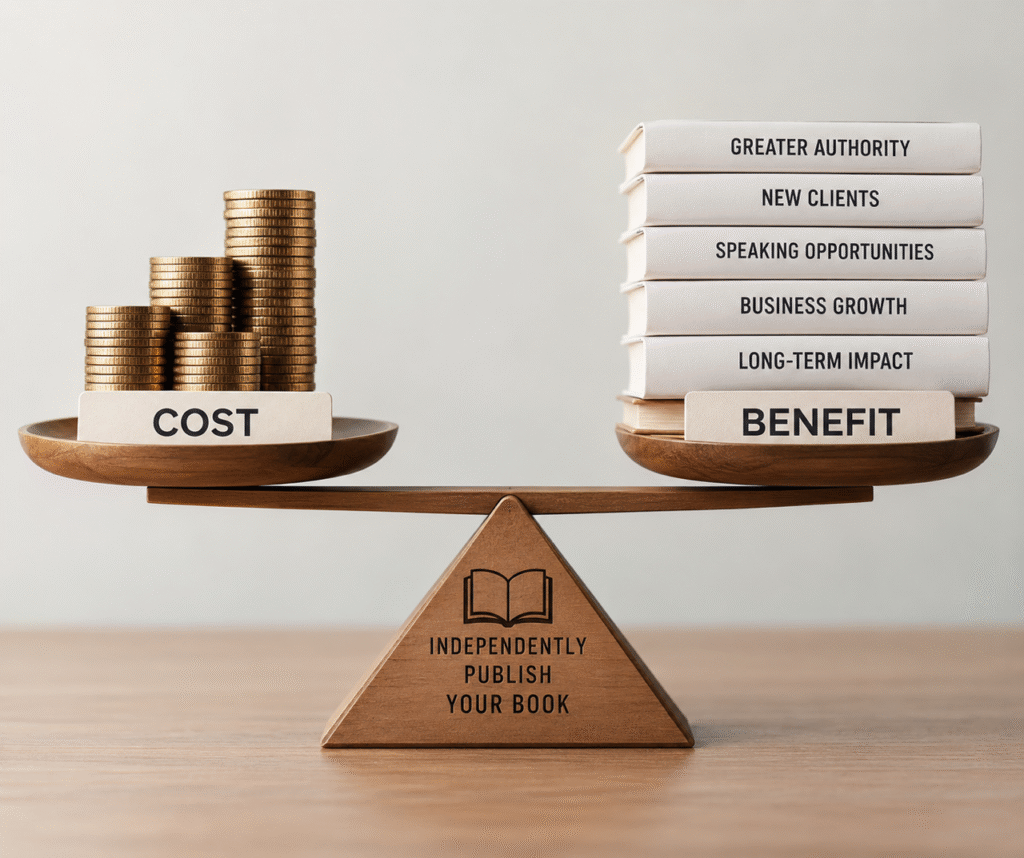
How much will it cost and how long will it take to independently publish your book? This is one of the first questions aspiring authors ask me, and understandably so.
The short answer is that if you want to independently publish a high-quality, commercially credible nonfiction book, I would allow approximately seven to nine months and budget around $20,000 for the publishing process.
If you also engage an experienced book writing coach to help you develop the book, strengthen the idea and guide you through the process, the total investment may be closer to $30,000.
Can you do it faster? Absolutely.
Can you do it more cheaply? Without a doubt.
But after working with more than a thousand authors, I can tell you that speed and cheapness generally come at a cost. And that cost tends to show in the finished book.
There is an enormous difference between uploading a document to Amazon and professionally publishing a book. If your book is intended to build your authority, attract quality clients, open doors, generate speaking opportunities and represent your expertise for many years, it needs to be treated as a serious professional product.
The realistic timeline for independently publishing a book
As a broad guide, I would break the process into three main stages.
Stage one: Developing the idea and writing the first draft (allow three to four months)
Before you start writing, you need to know exactly what book you are writing, who it is for and what you want it to achieve.
This means developing and testing the book idea, defining the ideal reader, identifying the problem the book will solve, clarifying its central promise and working out how the content should be structured.
For a commercial nonfiction book, this is also when you need to think seriously about the role the book will play within your broader business. What do you want readers to do after reading it? Do you want them to engage you as a consultant, join a programme, book you to speak, attend a workshop, purchase a course or explore your other products and services?
This is what I call the product architecture behind the book. Your book should not exist as an isolated product. It needs to sit within an intelligently designed ecosystem of products, services and opportunities.
Once the idea, positioning and structure are clear, you can begin writing the first draft. For most authors, three to four months is a solid and achievable timeframe, provided they have a clear plan and write consistently.
Of course, some people will take longer. That is not necessarily a problem. I would much rather see an author take the time required to write a thoughtful, substantial and deeply useful book than race to produce something ordinary.
Stage two: Reviewing and strengthening the manuscript (allow approximately one month)
When the first draft is finished, put it down for a short period before reviewing it. You need some distance from the manuscript so you can come back to it with fresher eyes. This is when you look at the book as a whole rather than becoming distracted by individual sentences.
Does the book deliver on its promise? Is the argument clear? Is the structure logical? Are there gaps, unnecessary repetitions or sections that feel underdeveloped? Does the book contain enough stories, examples, evidence, tools and practical advice? Does it sound like you?
This review stage is different from professional editing. It is the author’s opportunity to strengthen the thinking, content and structure before the manuscript enters production.
Allowing a month gives you time to read the manuscript properly, receive trusted feedback and complete any necessary rewriting.
Stage three: Editing, production and publishing (allow three to four months)
Once the manuscript is ready, it moves into the professional publishing process.
This may include:
- Structural or substantive editing
- Copyediting
- Internal page design and typesetting
- Cover design
- Proofreading
- Corrections and final file preparation
- ISBNs and publishing administration
- Printing
- Setting up Print On Demand
- Amazon and other distribution setup
- Audiobook recording and production
- Uploading and checking the various editions
Three to four months is a realistic timeframe for this stage if you are working with experienced professionals and managing the process properly.
There will usually be several rounds of corrections and approvals. Printed proofs need to be checked. Amazon listings need to be created carefully. The audiobook needs to be recorded, edited, mastered and approved.
None of these tasks is particularly mysterious, but there are many moving parts. Every stage also depends on people being available and completing their part of the process on time.
Not everything has to happen sequentially
Although I have described the process in three stages, many tasks can and should happen simultaneously.
For example, your cover designer can begin exploring concepts while the manuscript is being edited. Your audiobook planning can begin before the printed book is finished. Your Amazon description, author biography and marketing copy can be drafted while the book is being typeset.
You can also start building your launch plan, developing speaking topics, creating workshops, recording supporting content and approaching potential promotional partners well before publication.
This overlap can shorten the overall timeframe considerably. More importantly, it helps ensure that the book does not simply arrive one day with no audience, no plan and no commercial pathway behind it.
The key is having someone coordinating the entire process. Without clear project management, simultaneous activity can quickly become simultaneous confusion.
So how much does it cost to independently publish a quality book?
I generally advise authors to budget approximately $20,000 for the professional publishing and production process.
That figure may include:
- Editing
- Internal design and typesetting
- Cover design
- Proofreading
- Publishing administration
- An initial print run
- Amazon and distribution setup
- Audiobook recording and production
The final amount will vary according to the length and complexity of the book, the level of editing required, the size of the print run, the quality of the audiobook production and the professionals you choose to work with.
A heavily illustrated book will cost more than a straightforward text-based book. A manuscript requiring substantial structural editing will cost more than one that arrives in excellent shape. Printing 1,000 copies is clearly different from ordering a small initial run.
If you engage an experienced book writing coach to help you clarify the idea, develop the structure, stay accountable and create a stronger manuscript, I would allow approximately $30,000 for the entire process.
That is a significant investment and it shouldn’t be entered into lightly.
Yes, you can publish a book much more cheaply
There will always be someone offering to edit, design, publish and promote your book for a surprisingly small amount of money. Most now offer these services as humans but realistically they are done by AI. And that brings a whole other range of issues.
There are also countless online tools that allow you to do almost everything yourself. The question is not whether it can be done cheaply, it can. The real question is: What standard of book do you want representing you?
Poor editing shows, amateur internal design shows, a generic cover shows and weak audiobook production certainly shows. Your readers may not always be able to explain what feels wrong, but they will notice that the book does not feel professional. That affects how they judge the content and, by association, how they judge you.
If you are using your book to position yourself as an expert, the quality of the book becomes part of the evidence supporting that claim.
How should you think about the return on investment?
For a business author, the return on investment should not be measured by book sales alone. In fact increasingly this is the least important measurement tools. The real commercial value of your book will often come from the coaching clients, consulting projects, speaking engagements, workshops and other opportunities it generates.
If you have the right product architecture behind your book, along with an engaged community of people who know and trust you, it should not take a great deal to recover an investment of $20,000 or $30,000.
One quality client, a few programme participants or a single substantial speaking or consulting engagement may cover much of the cost.
This is why the commercial thinking needs to begin before you write the book. You need to understand what you want readers to do next, what you have available for them to buy and how the book will lead them naturally into your broader business.
The book still needs to deliver genuine value and stand on its own merits. It should never feel like an extended sales brochure. But it should sit within a clear ecosystem of products, services and opportunities.
Get that architecture right, build and engage your community, and the return on your investment can extend far beyond the number of books you sell.
Look at this as a substantial investment with a great potential.
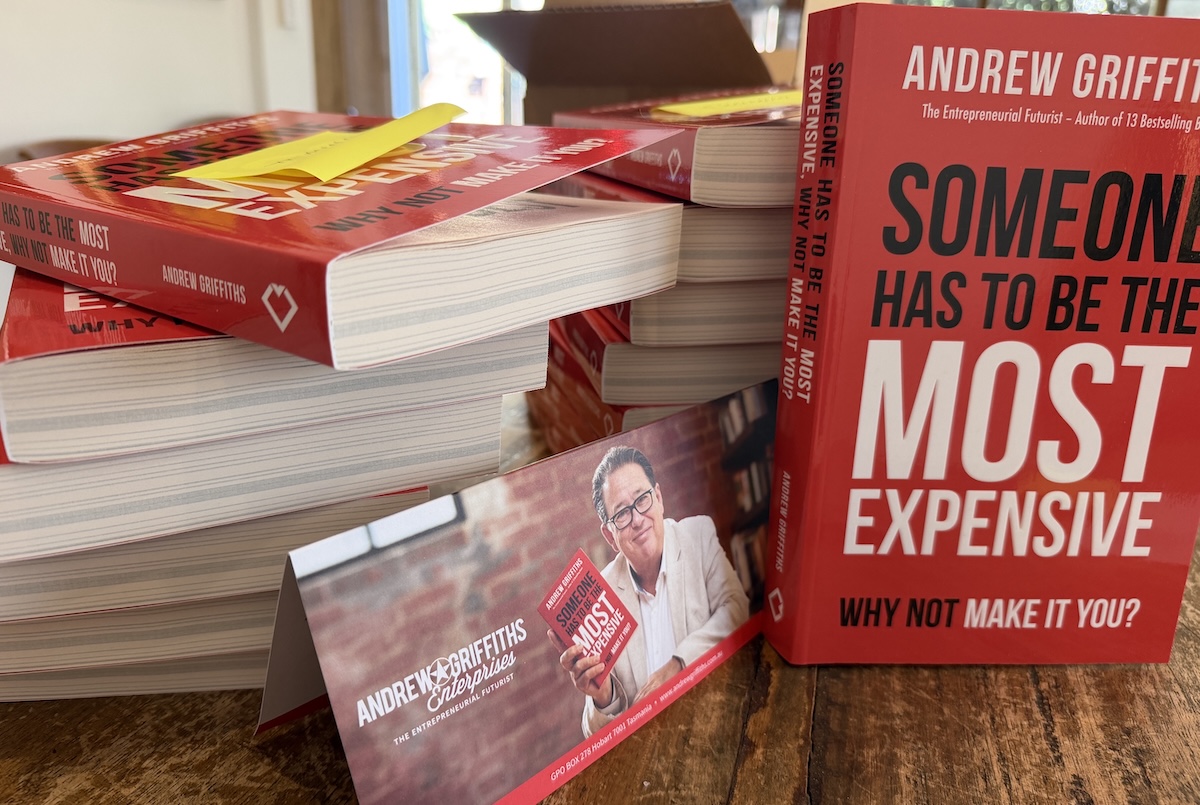
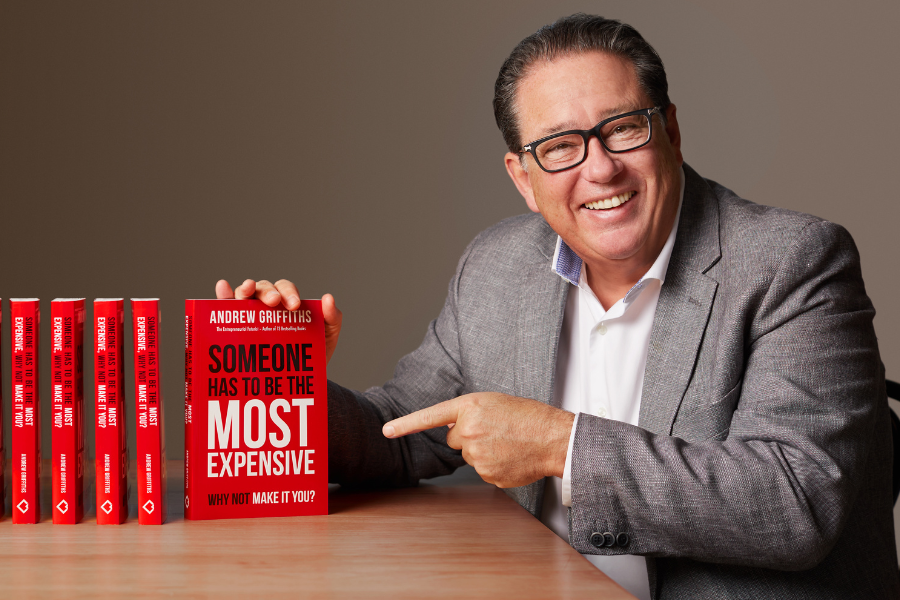
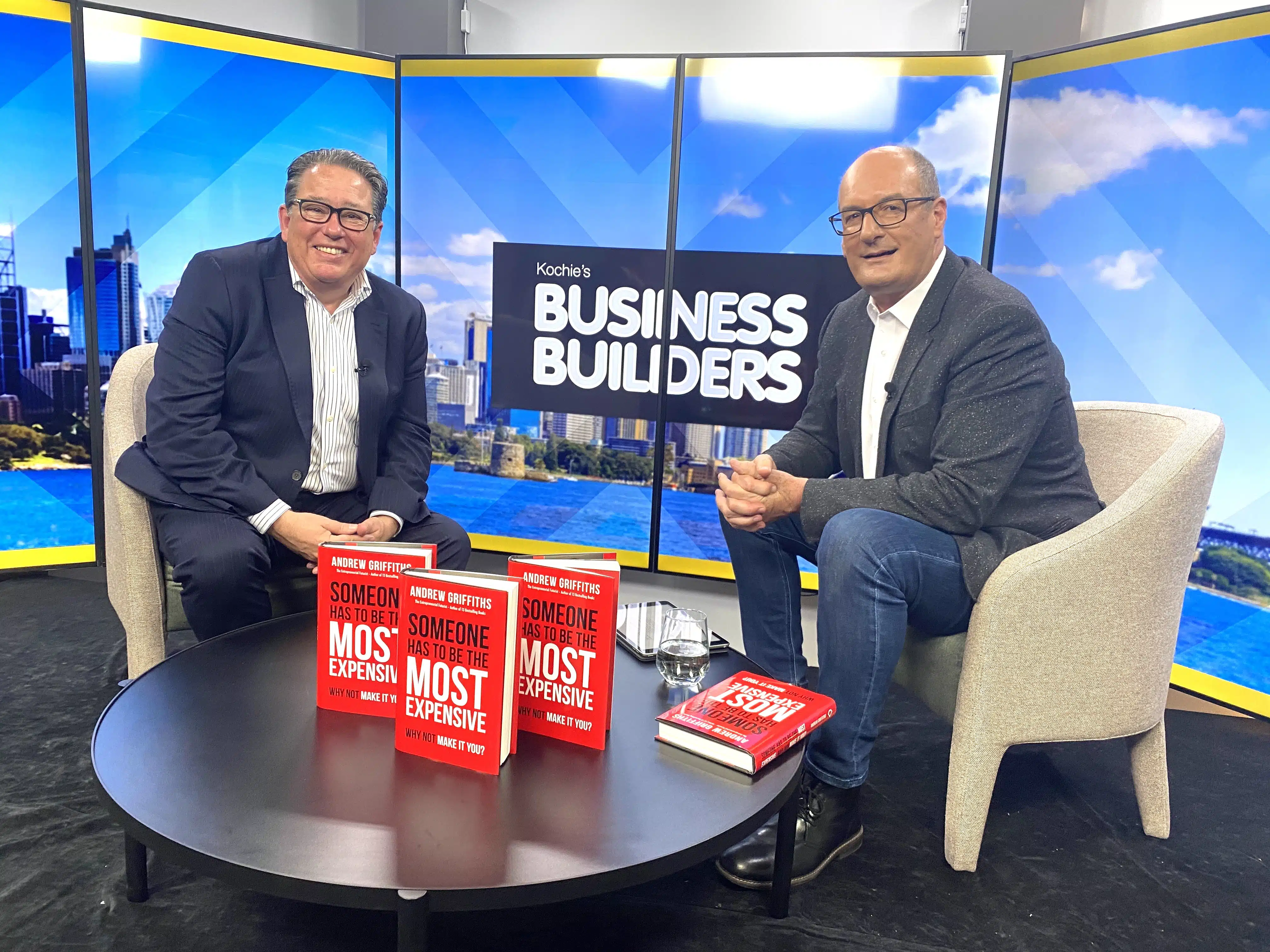
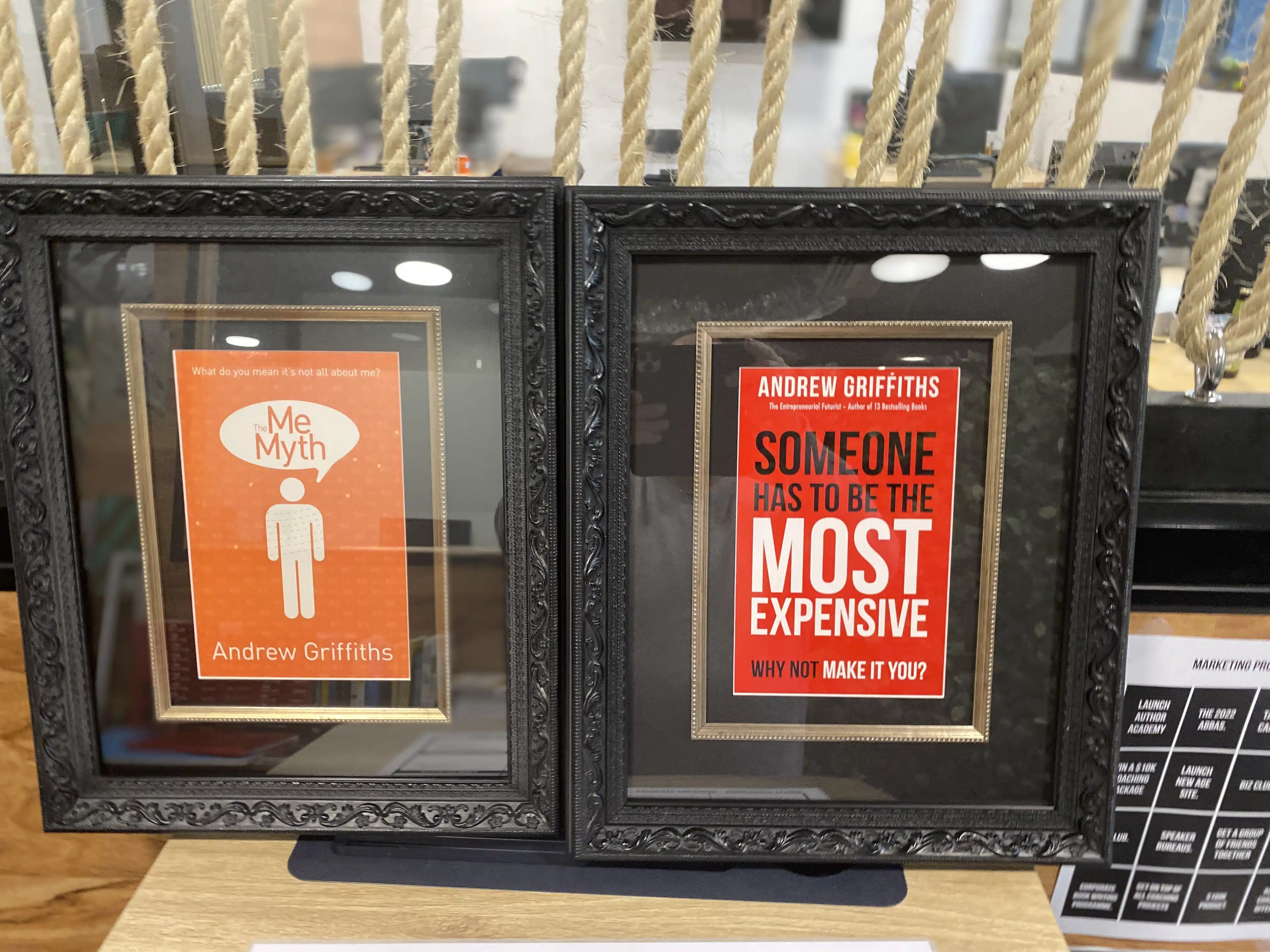
For me the idea of spending $20,000 – $30,000 on publishing a book is a no brainer. I’ve done it time and time again and I know that the return on investment is extraordinary. With my last book, Someone has to be the most expensive why not make it you?, the publishing cost was $25,000. The first week the book was out I got a new coaching client who had never heard of me, but he picked up the book and contacted me immediately. I’ve been coaching him for 5 years, that’s over $130,000 in coaching fees alone. And we are far from finished.
One book created that. And I still had another 1999 printed books to leverage, the audiobook, print of demand books and Amazon kindle – all of these wonderful ways for people to get my book and then reach out to buy my products or services.
My point here is that if you have a smart product ecosystem, a leveraging mindset and an engaged community, this big investment can generate very substantial returns, year after year. And without doubt, the better quality the book is from the start, the more thorough and professional the publishing process is and the more prepared you are to leverage your book, the smaller the risk.
This has certainly been my experience. If you want to increase the chances of your book creating extraordinarily results, invest from the start, work with the right team and start planning how you are going to use the book once it arrives. If you’re hoping to make a million dollars selling books via Amazon or in bookstores, that’s a much harder road.