The demand for “knowledge products” just keeps increasing and that spells opportunity in often unexpected ways.
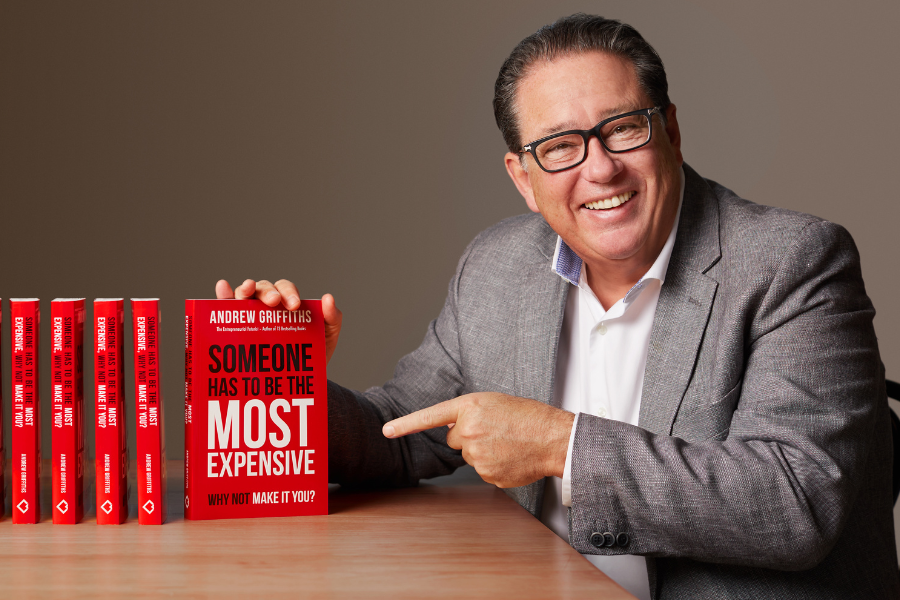
One of the greatest opportunities sitting right under our nose is turning what we already know and do into products people will pay for. As one example, if you’re a business author, you’ve already done the heavy lifting. You’ve distilled years of experience, lessons, and insights into something tangible, your book. But that book isn’t the end of the story, it’s the beginning of a much bigger ecosystem of ideas, tools, and resources, called knowledge products that others will gladly pay for.
What exactly are knowledge products?
They’re anything that takes what’s in your head and packages it in a way that others can learn from. That could be a workshop, a program, a retreat, a podcast, a set of templates, a course, a group coaching series, and of course a book.
It’s when you figure something out, and then you say, “Right, I’ve learnt this the hard way, now let me show others how to do it easier.”
For authors, this is gold. Because when someone reads your book and thinks, I want to know more, you can say, “Fantastic, here’s how you can go deeper.” That’s when your book stops being a one-off product and becomes a business builder.
Why knowledge products matter more than ever
We live in an age where everyone wants to know very specific “how to” information. We can Google anything, sure, but people are overwhelmed and we’re all aware of the rabbit hole that is the world of Google. Chat GPT and other AI platforms are certainly fine tuning the search side of things, but the information is unreliable and often lacking.
We don’t just want information anymore, we want trusted advice and instructions, that cut through the flufff. We want to learn from someone who’s actually walked the path, made the mistakes, and figured out what works. That’s you.
Your unique knowledge has value. It’s not generic, it’s not theoretical, it’s uniquely yours. The way you do what you do, the experiences that shaped you, the lessons you’ve learned, that’s the secret sauce that no one else can replicate. I quote this saying to authors, entrepreneurs and thought leaders all of the time –
No one on the planet has the same experiences, trials, tribulations, realisations, battles, victories or bazinga moments as you. Use what makes you unique.
So, if you’re sitting there thinking “Who am I to teach others?”, please stop. The stuff you’ve figured out, the things you do differently, how you’ve dealt with certain situations and what you do on a day to day basis to achieve your goals are of value to others, but only if you can package them up into ways that make them buyable.
Where people go wrong
Now, let’s be honest, not all knowledge products work. In fact, most don’t. And it’s usually because of a few common mistakes:
- No clear strategy. They create random stuff with no big picture in mind.
- No community. They build products but have no one to sell to.
- No research. They assume people will buy something just because they made it.
- No structure. They throw information at people without a framework.
- And my personal favourite, the big sales pitch and tiny deliverable. They promise the world, then deliver a lousy Powerpoint or PDF that leaves the buyer disgruntled for having made yet another dud purchase.
Sound familiar? It’s not hard to get caught in this trap. But there’s a better way.
The smarter way to build knowledge products
STEP 1 – Start with one question, why am I creating this?
Maybe it’s to add value to your readers. Maybe it’s to create a new income stream. Maybe it’s to give your clients a next step beyond your book. Once you know the purpose, everything else falls into place.
Then, do your research. Find out what your audience actually wants. Listen to your community. The smartest product creators don’t start by guessing, they start by asking.
I do this all the time. I’ll jump on Facebook or send an email and say, “Hey folks, if I created something like this, would you be interested?” The feedback is immediate. If people lean in, I develop it. If they don’t, I park it. That simple.
Once you know there’s demand, create a small pilot version. Test it with a handful of people. Get their feedback. Refine it. Then go bigger.
STEP 2 – Work to your strengths
If you’re a great speaker, record videos. If you’re a writer, create workbooks or online guides. If you love conversation, start a podcast. There’s no rule that says your knowledge must live in one format. The key is to share it in a way that feels natural to you and useful to your audience.
And remember, your content doesn’t have to be complicated. In fact, simple is better. Some of the best knowledge products I’ve ever seen are incredibly straightforward. They solve a real problem, fast. You don’t have to prove how smart you are. You just have to be genuinely helpful.
STEP 3 – Create experiences, not transactions
One of the easiest ways to stand out is through surprise and delight. Go the extra mile. Give people something unexpected, a bonus video, a handwritten note, a resource they didn’t expect. It doesn’t have to be expensive, it just has to be thoughtful.
We’re living in a world where people crave connection. So, create experiences that make them feel seen, supported, and inspired. That’s what turns a customer into a fan.
STEP 4 – Build your ecosystem
Your book is one product. Your workshop is another. Your course, your retreat, your podcast, all part of the same ecosystem. The idea is to give people logical next steps.
Think of it like scuba diving, forgive the metaphor from my dive instructor days. People start with one course, then they do another, then another. Each step builds on the last. Before you know it, they’re not just a customer, they’re part of your world.
That’s how you future proof your business as an author. One solid product leads to another. Each one deepens your relationship with your audience and strengthens your credibility.
The bottom line
If you’ve written a business book, you’ve already proven that you have valuable knowledge to share. Now it’s time to turn that knowledge into something bigger, a range of products that keep delivering value long after the last page is read.
Start small. Pick one idea. Turn it into something useful. Launch it. Learn from it. Improve it. Then do it again.
That’s how you build a body of work. That’s how you build a business around your ideas. And that’s how you build a legacy that lasts long after the ink dries.